Cats
 Dogs
Why Is My Dog's Skin Dry in Winter?
Why dogs get dry, flaky skin in winter, what helps at home according to the ASPCA, and the other causes of flaking that need a vet.


Dog dry skin in winter usually comes from the weather itself. The ASPCA explains that winter's dry, cold air, and going back and forth between the cold outside and a warm home, can cause itchy, flaking skin.
Its advice is to keep your home humidified, towel-dry your dog after walks and bathe as little as possible during cold spells. Flaking can also have other causes, though, so if it doesn't settle or comes with redness or hair loss, see your vet.
Why does winter dry out a dog's skin?
A dog's skin does a lot of quiet work. The Merck Veterinary Manual's guide for dog owners describes it as a barrier against the environment that also keeps in fluids, salts and nutrients.
Here is a number most people don't expect: Merck says the skin can make up 12 to 24% of a dog's body weight, depending on age. That is a large organ to keep comfortable through a dry season.
Oil glands in the skin produce sebum, which Merck says keeps the skin soft, moist and pliable, and gives the coat its sheen. The top layer of skin cells is continuously shed and replaced from below.
The ASPCA names winter's dry, cold air, along with chilly rain, sleet and snow, as causes of chapped paws and itchy, flaking skin. Moving from the cold into a heated home, over and over, adds to it.
The evidence here is limited. We found no veterinary study that measures how much drier dogs' skin gets in winter, so the guidance below comes from the ASPCA's cold-weather advice and Merck's descriptions of healthy skin.
What can I do at home?
The ASPCA's cold-weather tips cover most of it:
- Keep your home humidified.
- Towel-dry your dog as soon as they come inside.
- Bathe as little as possible during cold spells. The ASPCA says washing too often can remove essential oils and raise the chance of dry, flaky skin.
- If a bath can't wait, ask your vet to recommend a moisturizing shampoo or rinse.
- Never shave your dog down to the skin in winter. A longer coat gives more warmth.
- Make sure there is plenty of fresh water. The ASPCA says it helps keep dogs well-hydrated and their skin less dry.
Merck adds one firm rule for bath time: never use a shampoo made for people without your vet's consent. Our guide to how often to bathe a dog covers the rest of the routine.
Brushing and paws
Brushing helps too. The ASPCA's grooming guide says it removes dirt and spreads natural oils through the coat. It suggests weekly brushing for short, smooth coats and daily attention for long, silky ones.
Winter walks add salt and de-icing chemicals. The ASPCA advises washing and drying your dog's feet and stomach after each walk, and checking for cracked paw pads or redness between the toes.
For long-haired dogs, it suggests a trim, including the hair between the toes, to cut down on clinging ice balls, salt crystals and de-icing chemicals that can dry the skin.
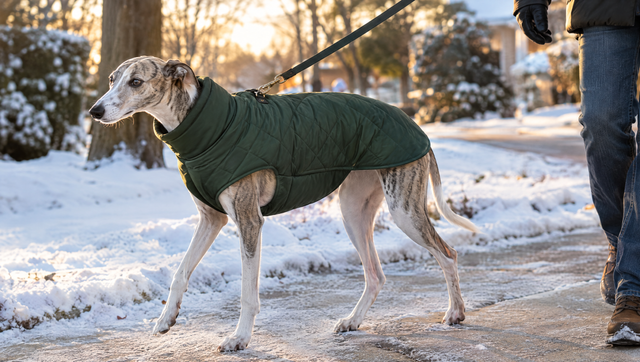
For short-haired dogs, the ASPCA suggests a coat or sweater with a high collar, covering from the base of the tail to the belly. Our guide to does my dog need a winter coat helps you decide.
Does diet make a difference?
For most dogs on a complete food, probably not much. Merck's guide for dog owners says skin problems can be linked to shortages of protein, fats, minerals, some vitamins and trace elements, but that this is uncommon in dogs fed modern, balanced diets.
Fats are the ones most often discussed. Merck says a shortage of essential fatty acids can cause a dry, scaly, lusterless coat, but calls it extremely rare in dogs fed properly preserved complete and balanced diets.
Merck also notes that fatty acid supplements are often recommended for dogs with dry, flaky skin and dull coats. Ask your vet before adding one. Our guides to omega-3 for dogs and choosing a dog skin and coat supplement explain what to check first.
The ASPCA also suggests feeding a little extra in winter, because pets burn extra energy trying to stay warm. Talk to your vet about how much, so the extra doesn't add up.
When is it more than winter dryness?
Flaky skin has several possible causes, and some of them need a vet. These are the ones Merck describes for dogs.
Mites. Merck explains that "walking dandruff" is caused by Cheyletiella mites, and that the dandruff seen moving is the mites themselves. Scaling along the back is common. The mites spread easily from pets to owners.
Seborrhea. Merck describes this as a defect in how the skin's outer layer forms, causing extra scale and sometimes greasiness. Some breeds inherit it. More often, Merck says, it is a sign of another problem, most commonly hormonal disorders and allergies.
Hormonal disorders. Merck notes that hypothyroidism can cause dry, scaly, thickened skin with reduced hair growth and hair loss, and that secondary bacterial infection may follow.
A vet can sort these out. Merck lists a skin exam, skin scrapings, flea combing, cultures and sometimes blood tests among the ways a vet finds the cause.
Call your vet promptly if your dog has:
- flaking that doesn't settle with the home steps above
- flakes that seem to move, since Merck notes these mites can spread to people
- redness or inflammation, rashes or hot spots
- scabs, lesions, or drainage of blood or pus
- hair loss or bald patches
- swellings, lumps or skin discoloration
- a habit of scratching, licking or chewing at the skin
- cracked paw pads or redness between the toes
Most of that list comes from the ASPCA's grooming checklist, which advises a vet exam as soon as you notice anything abnormal in your dog's skin or hair.
Questions new dog parents ask
Should I bathe my dog less in winter?
The ASPCA says to bathe as little as possible during cold spells, because washing too often can strip essential oils. Ask your vet about a moisturizing shampoo if a bath can't wait.
Does a humidifier help a dog's dry skin?
The ASPCA's cold-weather advice is to keep your home humidified and to towel-dry your dog as soon as they come inside.
Can I use my own shampoo or lotion on my dog?
Merck says never to use a shampoo formulated for people without your vet's consent. Ask your vet before putting any product made for people on your dog's skin.
Is dog dandruff normal in winter?
Dry air can cause flaking, per the ASPCA. Merck adds that flakes can also come from mites or another skin condition, so flaking that lasts or spreads is worth a vet visit.
Sources
- ASPCA: Cold Weather Safety Tips
- ASPCA: Dog Grooming Tips
- Merck Veterinary Manual: Structure of the Skin in Dogs
- Merck Veterinary Manual: Seborrhea in Dogs
- Merck Veterinary Manual: Mite Infestation (Mange, Acariasis, Scabies) in Dogs
- Merck Veterinary Manual: Whole-body Disorders that Affect the Skin in Dogs
- Merck Veterinary Manual: Nutritional Requirements of Small Animals
This article is for general information and is not veterinary advice. Talk to your vet about your own dog — they know the animal in front of them.
Choolip products are food supplements, not medicine. They are not intended to diagnose or manage any medical condition. If your dog has been diagnosed with a condition, their diet should be set by your vet.
Try a Little of Everything First
The Trial Box has a Variety Pouch, two Total Balance Jumbo sticks and two Berry Good Milks. One box, $22.