Cats
 Dogs
Glucosamine for Dogs: What the Evidence Shows
What glucosamine is, what the best dog studies found, whether it's safe, and how to choose one if your vet suggests it.


Glucosamine for dogs is safe at normal amounts, but the evidence that it helps is weak. In the best-controlled trials, dogs with stiff, sore joints did no better on glucosamine than on a dummy pill.
A healthy dog on a complete and balanced food doesn't need it. If your dog is slowing down, a vet check will do more than any jar on the shelf.
That's a blunter answer than most labels give. Here's what glucosamine is, why the studies disagree, and how to choose one if your vet suggests it.
What is glucosamine?
Glucosamine is an amino sugar, a small building-block molecule the body already makes. It sits inside cartilage, the smooth, slippery layer that covers the ends of bones in a joint.
A review in the Open Veterinary Journal explains that glucosamine and chondroitin help the body make glycosaminoglycans and proteoglycans. Those are the raw materials of cartilage, which is where the whole idea of feeding extra comes from.
Here's the part that surprises people. The glucosamine in most supplements comes from the shells of shellfish and crustaceans, according to the same review. Synthetic versions exist too.
It's almost always sold alongside chondroitin. When you read about "glucosamine" trials, most of them tested the two together, often with other ingredients added.
Hydrochloride or sulfate?
Labels list glucosamine in different forms. The two you'll see most are glucosamine hydrochloride (HCl) and glucosamine sulfate.
The Open Veterinary Journal review notes that most veterinary supplements use the hydrochloride form. It packs more glucosamine per gram and is cheaper to make.
The catch is that, in human research, the hydrochloride form has shown poorer absorption and poorer results than crystalline glucosamine sulfate. Nobody has settled whether that difference holds in dogs.
Does glucosamine for dogs actually work?
The honest answer is that the research is mixed, and the stronger the study, the weaker the result. It helps to know that every efficacy trial was run in dogs that already had osteoarthritis, the slow wear-and-tear joint disease.
That matters for you. No trial has shown that glucosamine keeps a young dog's healthy joints healthy.
The studies that found a benefit
A 2007 trial in the Veterinary Journal compared a glucosamine and chondroitin product with carprofen, a prescription pain medicine, in 35 dogs with hip or elbow osteoarthritis.
By day 70, the glucosamine group had improved in pain, weight-bearing and overall severity. The carprofen dogs improved sooner. The trial had no placebo group, so it could not show how much of that change the supplement caused.
The studies that didn't
A 2017 trial put it to a tougher test. Sixty dogs with osteoarthritis wore activity monitors for 97 days. Half got a glucosamine and chondroitin supplement, half got a placebo.
The monitors found no difference in how active the two groups were. Owners in both groups reported less pain, and the researchers called that what it was: a caregiver placebo effect.
That finding is worth sitting with. Owners who give a supplement want it to work, and they genuinely see improvement. The activity monitor, which has no hopes either way, did not.
What the big reviews concluded
A 2022 meta-analysis from the University of Montreal pooled nine trials of glucosamine and chondroitin. It found what its authors called a "very marked non-effect" and said these products should no longer be recommended for osteoarthritis pain in dogs and cats.
The Merck Veterinary Manual reaches the same view. Its osteoarthritis chapter says the available evidence does not support glucosamine and chondroitin for pain management in dogs.
The Open Veterinary Journal review was more cautious. With so few well-designed studies, it concluded the benefits "can neither be confirmed nor denied".
Omega-3 fatty acids are the ingredient with stronger support, and our guide to omega 3 for dogs covers them. For how all the common ingredients compare, see joint supplements for dogs.
Is glucosamine safe for dogs?
At normal amounts, it appears to be. The 2017 placebo trial reported no serious side effects over three months.
The Open Veterinary Journal review lists the possible side effects as hypersensitivity reactions and minor stomach upsets, such as gas and softer stools.
A common worry is blood sugar, because glucosamine is a sugar. A small study in the Journal of the American Veterinary Medical Association gave 12 healthy dogs glucosamine and chondroitin for three weeks. It found no change in fructosamine, a marker of longer-term blood sugar.
A few cautions still apply:
- Most glucosamine comes from shellfish, so ask your vet first if your dog has a known shellfish allergy.
- Store chewable joint products out of reach, the way you would any medicine, so your dog can't help himself to the tub.
- Use a product made for dogs unless your vet says otherwise. Human products are dosed for people and can contain other ingredients.
How much glucosamine should I give my dog?
Ask your vet, and here is why. The Open Veterinary Journal review states there is currently a lack of evidence to confirm a specific dose of glucosamine for dogs.
Absorption is part of the puzzle. In a study of beagles cited in that review, only about 12% of a swallowed dose of glucosamine hydrochloride reached the bloodstream.
So the number on the label is a manufacturer's choice. Your vet can weigh it against your dog's size, health and any other medicines.
If the product your vet suggests comes as a tablet, our guide on how to give a dog a pill makes daily dosing easier.
How do I choose a glucosamine supplement?
Start with how these products are regulated. The FDA says it does not recognize animal supplements as a special category. It treats them as food or as animal drugs, and they don't get a safety review before they go on sale.
Quality varies too. The Open Veterinary Journal review found veterinary glucosamine products differ widely in strength, form and added ingredients.
Three checks help:
- Look for the NASC Quality Seal. The National Animal Supplement Council is an industry body, and its seal requires a facility audit every two years and random independent testing that products meet their label claims.
- Read the glucosamine form and the amount per chew or tablet, so you can show your vet exactly what you're giving.
- Be wary of any label that promises to cure or reverse joint disease. Those are drug claims, and supplements can't make them.
Does a healthy dog need glucosamine?
No. WSAVA, the global association of small-animal vets, says there is no need to add vitamin or mineral supplements to a complete and balanced commercial food.
Its broader advice applies here too: supplements should be carefully evaluated for efficacy and safety, and you should talk to your vet before using one.
The step with the best evidence costs nothing. Merck calls weight optimization the primary preventive method to slow the development of osteoarthritis in dogs. Keeping your dog lean does more for joints than any jar can claim.
Movement counts as well. Merck notes that exercise reduces pain through several mechanisms in the body, which is one reason vets build activity plans for stiff dogs.
Call your vet promptly if your dog:
- is slow to get up, especially after a long rest
- struggles with stairs, or stops jumping into the car or onto the couch
- plays less than usual, or tires quickly on walks
- won't put weight on a leg
- has eaten a large number of joint chews
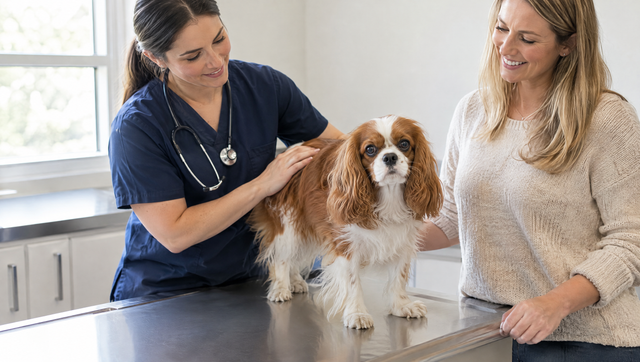
Merck notes that up to 40% of dogs aged 8 months to 4 years already have osteoarthritis, though signs usually don't show until 5 to 13 years. Early changes are easy to miss, so mention them at every checkup.
Questions dog parents ask
Can I give my dog human glucosamine?
Check with your vet first. Human products are dosed for people and may include other ingredients, so a dog product, or one your vet chooses, is the safer route.
How long does glucosamine take to work in dogs?
In the 2007 trial that found a benefit, changes showed by day 70. The 2017 placebo trial found no difference after 90 days. If your vet suggests a trial, agree on how you'll judge it before you start.
Can puppies take glucosamine?
There's no evidence it helps healthy puppies. For growing large breeds, WSAVA advises measured meals for slow, steady growth, because fast growth is linked to joint and skeletal problems.
Is glucosamine with chondroitin better than glucosamine alone?
Most dog studies tested the two together, so there's little evidence either way. The combination is what the reviews above judged weak.
Sources
- Merck Veterinary Manual: Osteoarthritis in Dogs and Cats (Epstein and Carnevale, 2025)
- Bhathal A, et al. Glucosamine and chondroitin use in canines for osteoarthritis: A review. Open Veterinary Journal, 2017
- Barbeau-Gregoire M, et al. A 2022 Systematic Review and Meta-Analysis of Enriched Therapeutic Diets and Nutraceuticals in Canine and Feline Osteoarthritis. International Journal of Molecular Sciences, 2022
- McCarthy G, et al. Randomised double-blind, positive-controlled trial to assess the efficacy of glucosamine/chondroitin sulfate for the treatment of dogs with osteoarthritis. Veterinary Journal, 2007
- Scott RM, Evans R, Conzemius MG. Efficacy of an oral nutraceutical for the treatment of canine osteoarthritis. Veterinary and Comparative Orthopaedics and Traumatology, 2017
- Lenox CE, Lunn KF. Effects of glucosamine-chondroitin sulfate supplementation on serum fructosamine concentration in healthy dogs. JAVMA, 2010
- WSAVA Global Nutrition Committee: Frequently Asked Questions and Myths
- FDA: FDA's Regulation of Pet Food
- National Animal Supplement Council (industry body): The NASC Quality Seal
This article is for general information and is not veterinary advice. Talk to your vet about your own dog — they know the animal in front of them.
Choolip products are food supplements, not medicine. They are not intended to diagnose or manage any medical condition. If your dog has been diagnosed with a condition, their diet should be set by your vet.
Try a Little of Everything First
The Trial Box has a Variety Pouch, a Jumbo stick and two Berry Good Milks. Subscribe & Save, $22.00 a box.