Cats
 Dogs
Healthy Snacks for Cats: What to Look For
How many snacks a cat can have a day, why a little tuna counts for so much, which foods to avoid, and what makes a cat snack a healthy one.


Healthy cat snacks are small and counted. WSAVA advises that treats of all kinds make up less than 10% of a cat's daily calories. For an average 4 kg (about 9 lb) adult cat, its table puts that at about 22 calories a day.
The ASPCA sets the line lower, at 5% or less of daily food intake. Either way, the snack allowance for a cat is tiny, and WSAVA notes that a single ounce of some common foods can use up the whole day.
Here is how to work out your cat's allowance, what makes a snack a good one, and which foods to keep off the list.
How many snacks can a cat have a day?
WSAVA's 2025 guide to feeding treats to cats sets out the maximum daily calories from treats by body weight. It is based on an average healthy adult cat in ideal body condition:
| Cat's weight | Most calories a day from treats |
|---|---|
| 2.5 kg (about 5.5 lb) | 18 |
| 3 kg (about 6.6 lb) | 20 |
| 4 kg (about 8.8 lb) | 22 |
| 5 kg (about 11 lb) | 25 |
| 6 kg (about 13.2 lb) | 26 |
| 7 kg (about 15.4 lb) | 28 |
The pound figures are our conversions. WSAVA asks you to speak to your veterinary team about your own cat's daily energy needs, since individual cats vary.
The veterinary sources don't agree on one number. The ASPCA says 5% or less, WSAVA says under 10%, and Cornell's Feline Health Center gives a rule of thumb of no more than 10 to 15 percent.
Why is the allowance so small?
Cornell explains that treats are not a nutritionally complete and balanced source of nutrition. Merck's veterinary manual gives the same reason for keeping treats under 10% of calories: to prevent nutrient deficiencies.
WSAVA adds that too many treats can be harmful if they unbalance the main diet or contribute to unintended weight gain.
A 2025 study in Veterinary Sciences tested the 10% figure against the labels of 124 cat foods sold in Brazil. For inactive cats, protein fell below the minimum in about 36% of diets once dry snacks made up 10% of calories.
The authors suggest the 10% allowance may warrant reconsideration, particularly for neutered and indoor cats. They worked from label data and didn't measure vitamins or minerals, but it's a good reason to treat 10% as a ceiling.
Why does a little tuna count for so much?
Here is the surprising part. WSAVA lists the calories in common human foods given to cats:
- 1 oz (28 g) cottage cheese, 2% fat: 25 calories
- 2 fl oz (59 mL) semi-skimmed cow's milk: 27
- 1 oz canned tuna in water: 36
- 1 oz cooked salmon: 39
- 1 oz lean cooked chicken breast, no skin: 47
- 1 oz cheddar cheese: 120
WSAVA notes that for many cats, just one of these in the quantity listed could exceed the maximum daily calories from treats. By our arithmetic, an ounce of tuna is about one and a half times a 4 kg cat's allowance.
Tuna carries a second caution. Cornell notes that some cats that have eaten canned fish products meant for humans have developed potentially serious neurological disorders. Our guide on can cats eat tuna goes through it in full.
Which foods should never be a cat snack?
WSAVA's guide lists these toxic food ingredients for cats:
- onions, leeks, shallots, garlic and chives
- grapes, raisins, currants and sultanas
- chocolate
- xylitol, a sweetener
- alcohol and raw yeast dough
- caffeinated drinks, including coffee, tea and energy drinks
- milk and dairy products, because many cats are lactose intolerant
WSAVA also warns that bones, cooked or raw, can be very dangerous and cause significant damage if chewed or swallowed. Unprocessed raw animal-based treats carry a risk of passing on germs.
WSAVA adds that any treat should be an appropriate size and shape to reduce the risk of choking.
Cornell adds that raw meat is not recommended as a food or a treat for cats, and Merck's guide for cat owners says to avoid table scraps. Our guide to what can cats eat covers the safer human foods.
Call your vet promptly if your cat:
- eats anything on the list above. The ASPCA's Poison Control line, (888) 426-4435, is open 24 hours a day, every day of the year, and a consultation fee may apply
- swallows a bone or a piece of a chew
- has a medical condition, dietary sensitivities, or eats a prescribed diet. WSAVA says ordinary treats may not be appropriate, so ask before giving any snack
- seems unwell after trying a new snack
What do healthy cat snacks look like on the label?
Cornell's Feline Health Center describes cats as obligate carnivores, relying on nutrients found only in animal products. A snack is a small extra alongside that complete, meat-based food. WSAVA says treats should never replace a meal.
With that in mind, this is what to check on the package, drawn from AAFCO's label rules and WSAVA's treat guide:
| Check for | Why it matters |
|---|---|
| Cats named on the front | AAFCO requires the species to be stated in words on the main panel. |
| Calories per piece or serving | WSAVA suggests asking the maker if calories aren't on the label. Without the number, you can't stay inside the allowance. |
| Snack, treat or supplement, or "intermittent or supplemental feeding" | AAFCO explains these products are meant to be fed in addition to a complete diet. |
| An ingredient list and a nutrient analysis | AAFCO requires ingredients in order of weight, plus minimum protein and fat and maximum fiber and moisture. |
| The maker's name and address | AAFCO requires it, and it's who you call with questions. |
How can I give snacks without overdoing it?
Count everything extra. WSAVA's definition of treats includes snacks, chews, supplements and food used to give medicine, so a pill pocket or a lick of topper comes out of the same allowance.
WSAVA also suggests other ways to spend fun, quality time with your cat, and asks you to supervise your cat with chews, treats and toys.
If you'd like a ready-made option, one made for cats is Choolip's Squeeze Vita Stick Variety Pouch. It holds seven creamy, squeezable recipes made with real chicken, salmon, tuna, pollack or lobster, plus fruits and vegetables.
Each stick is 15 g (0.53 oz), and the page says the sticks are for cats and dogs from 12 months old. You can offer one by hand, in a small bowl or over your cat's usual food.
Each recipe's page provides its ingredients, nutrient analysis and calories, so check the number and fit it inside your cat's allowance.
Your cat's main food sets the rest of the day's calories. Our guide on how much to feed a cat shows how to work that out.
Questions new cat parents ask
Can I give my cat snacks every day?
Yes, within the allowance. WSAVA says a cat can have treats as long as they make up less than 10% of daily calories and never replace a meal.
What are low-calorie snacks for cats?
WSAVA's FAQ for dogs and cats lists fruits and vegetables as low-calorie options, while avoiding toxic ingredients such as onions and garlic. Check calories on any commercial snack, and ask your vet what suits your cat.
How many snacks can a kitten have?
The ASPCA says treats should make up no more than 5% of a kitten's daily nutrient intake.
Are lickable snacks good for cats?
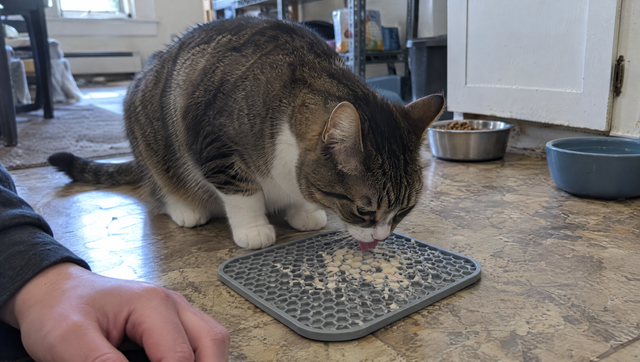
None of the sources we used compares snack formats. The same checks apply to a lickable snack as to any other: made for cats, calories on the label, and counted inside the daily allowance.
Sources
- WSAVA Global Nutrition Committee: Feeding treats to your cat (2025)
- WSAVA Global Nutrition Committee: Frequently Asked Questions and Myths
- Cornell Feline Health Center: Feeding Your Cat
- ASPCA: Cat Nutrition Tips
- ASPCA Poison Control
- Merck Veterinary Manual: Proper Nutrition for Cats (Cat Owners)
- Merck Veterinary Manual: Feeding Practices in Small Animals
- Príncipe LA et al. Assessment of the Nutritional Impact of the 10% Snack Recommendation in Pet Diets. Veterinary Sciences, 2025
- AAFCO: Pet food and treat label requirements
- AAFCO: Selecting the Right Pet Food
This article is for general information and is not veterinary advice. Talk to your vet about your own cat — they know the animal in front of them.
Try a Little of Everything First
The Trial Box has a Variety Pouch, two Total Balance Jumbo sticks and two Berry Good Milks. One box, $22.