Cats
 Dogs
Why Do Cats Knead?
Why cats knead, from nursing kittens to adult cats making biscuits on your lap, what a change in kneading can mean, and how to handle the claws kindly.


Why do cats knead? The American Animal Hospital Association (AAHA) explains that kittens knead their mother while nursing to stimulate milk production. Feline experts theorize that adult cats knead to re-create the feel-good hormone release of nursing.
The AAHA also links kneading to getting comfortable, showing affection and scent marking. It calls the behavior completely normal, and one you should allow your cat to express.
Here's what each push of the paws may be about, and how the AAHA suggests handling the claws.
What does kneading look like?
The AAHA describes a kneading cat as one that massages or repeatedly pushes its toes into a soft or cushioned surface. Many owners call it "making biscuits," because it looks like a baker pushing and pulling dough.
The AAHA names the usual targets: a plush blanket, another pet, or a warm human lap. It also notes the sharp claws that can sink into your skin, which is why kneading on a bare lap can sting.
Why do cats knead?
The AAHA gives several reasons, and the first goes back to kittenhood.
It starts with nursing
Kittens knead their mother while nursing to stimulate milk production, the AAHA explains.
A 2020 survey by Delgado and colleagues, covering 1,358 kittens, recorded how often caretakers saw this. Kneading during suckling was reported 167 times, more often than purring.
It may feel good
According to the AAHA, feline experts theorize that adult cats knead to re-create the feel-good hormone release that occurs during nursing. The AAHA says kneading brings comfort and helps a cat release tension and relax.
Purring is another sound researchers trace to kittenhood, and our guide to why do cats purr covers what the research says about it.
It makes a comfortable bed
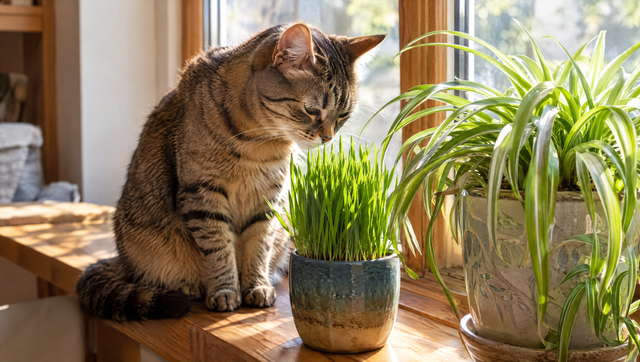
The AAHA notes that wild cats knead grass to create a comfortable resting place. Pet cats often knead soft objects before lying down, and some keep kneading after they've settled to convey contentment.
It leaves their scent
The AAHA says kneading favorite bedding, places or people leaves scent markings from glands in the feet, "effectively claiming them as their own."
Cornell's Feline Health Center describes the same paw glands depositing scent when cats scratch.
Why does my cat knead on me?
The AAHA says cats may knead their favorite people and other household pets to show affection, as they did with their mothers.
Researchers go a step further. A 2021 paper in the journal Animals lists kneading alongside purring and suckling as kitten behaviors that adult cats direct at people.
The same authors propose that cats may regard people as caregivers, approaching them the way a kitten greets its mother before nursing. This is the authors' interpretation, not a settled finding.
The AAHA ties kneading to comfort and relaxation. Our guide to signs of happiness in cats covers other cues to look for.
Is kneading ever a sign something is wrong?
The AAHA's guidance centers on change. If a cat kneads excessively, or suddenly kneads less than usual, it says this could mean the cat doesn't feel well.
Its reasoning: because kneading is a comforting action, cats who feel stressed or are experiencing pain may knead to soothe themselves.
The AAHA advises a vet visit if your cat:
- starts kneading excessively
- suddenly kneads less than usual
- shows any other significant change in behavior
- keeps kneading destructively after you've tried redirecting it
A visit lets your vet rule out a medical or behavioral problem, in the AAHA's words.
How do I stop kneading from hurting?
The AAHA advises redirecting kneading rather than preventing it, and says you should never yell at or punish your cat. Its reason: kneading is a natural behavior, and your cat needs an acceptable outlet for it.
The AAHA suggests:
- keeping a blanket nearby to protect your lap when your cat comes for cuddle time
- a thick, plush blanket of the cat's own as a designated kneading surface. If it kneads something you'd rather keep intact, draw its attention to the blanket or use a toy to redirect it.
- regular nail trims, which prevent sharp points that snag furniture and skin
- multiple scratching posts throughout the home
The AAHA/AAFP Feline Life Stage Guidelines note that cats can learn to accept nail trimming through positive reinforcement, and that shorter nails mean less damage to household items and to people.
Which scratching post do cats prefer?
The same guidelines summarize a study of what cats actually use. Rope was the most-used surface when offered, even though carpet was offered more often.
Cats scratched more on a simple upright post, or a cat tree with two or more levels, at least 3 feet high. One surprise from that study: cats aged 10 to 14 preferred carpet, while the other age groups chose rope.
The guidelines suggest putting posts near resting areas and along the paths cats use.
If the claws are a bigger problem around the house, our guide on how to stop a kitten scratching furniture covers posts, placement and training.
Questions new cat parents ask
Do all cats knead?
The AAHA describes kneading as completely normal, but no study we found puts a number on how many cats do it. If your cat's kneading habit changes, the AAHA advises a vet visit.
Why does my cat knead and purr at the same time?
The 2021 Animals paper groups kneading, purring and suckling together as kitten behaviors that adult cats show to people. The AAHA links kneading with comfort and relaxation.
Why does my cat knead and suck on blankets?
The 2020 kitten survey found suckling and kneading reported together, and that orphaned kittens were 5.87 times more likely to suckle on littermates. Bottle-fed kittens were more likely to as well.
If your cat chews or swallows fabric, ask your vet whether it needs a closer look.
Should I stop my cat from kneading?
The AAHA advises against it. It calls kneading a natural behavior your cat needs an acceptable outlet for, and suggests trimming the claws and keeping a blanket handy instead.
Why does my cat knead before lying down?
The AAHA compares it to wild cats kneading grass to create a comfortable resting place. Domestic cats often knead soft objects before lying down.
Sources
- American Animal Hospital Association: Why Do Cats Knead?
- Deputte BL, Jumelet E, Gilbert C, Titeux E. Heads and Tails: An Analysis of Visual Signals in Cats, Felis catus. Animals, 2021
- Delgado MM, Walcher I, Buffington CAT. A survey-based assessment of risk factors for cross-sucking behaviors in neonatal kittens, Felis catus. Applied Animal Behaviour Science, 2020
- Cornell Feline Health Center: Feline Behavior Problems: Destructive Behavior
- Quimby J, Gowland S, Carney HC, et al. 2021 AAHA/AAFP Feline Life Stage Guidelines. Journal of the American Animal Hospital Association, 2021
This article is for general information and is not veterinary advice. Talk to your vet about your own cat — they know the animal in front of them.
Try a Little of Everything First
The Trial Box has a Variety Pouch, two Total Balance Jumbo sticks and two Berry Good Milks. One box, $22.