Cats
 Dogs
Cat Not Eating? When to Worry and What to Do
What Cornell, Merck and the ISFM guidelines say about a cat not eating: why timing matters, the causes they list, and what to ask your vet.


Cornell's Feline Health Center warns that a cat not eating for as little as 24 hours can be seriously affected. For a kitten under six weeks old, it says 12 hours without food can be a lethal threat.
So a full day without food is a reason to call your vet. Cornell and Merck list stress, a change of food, dental problems and illness among the possible causes.
Merck describes the outlook for the most serious consequence, fatty liver, as good when it is diagnosed early and treated promptly. Here's why timing matters, what the sources list as causes, and what you can ask your vet about while you wait for the appointment.
Is a cat not eating an emergency?
It can become one. The ISFM consensus guidelines point out that cats are especially vulnerable to going without food because of their unique metabolism. The reason is in how their bodies handle hunger.
The Merck Veterinary Manual explains that when a cat stops eating, fat is pulled from storage faster than the liver can process it. The result can be hepatic lipidosis, often called fatty liver disease.
Merck calls it the most common cause of liver disease in cats. It links it to a period of poor appetite lasting anywhere from a few days to several weeks, especially in obese cats.
That's why veterinary feeding guidelines are firm about timing. The International Society of Feline Medicine's 2022 consensus guidelines say vets should start feeding support, by tube if needed, no later than 3 days after a cat stops eating.
Going by Cornell's 24-hour warning, a full day of eating nothing is worth a phone call to your vet, even if she seems otherwise fine.
Why would my cat suddenly stop eating?
Cornell describes a poor appetite as a sign rather than a disease in itself. The list of possible causes is long, which is why a vet visit matters more than guessing.
The sources group them roughly like this.
- Stress and change. Merck names moving, boarding, a new pet, getting lost, and the death of other pets or owners.
- A new food. Merck lists a change of diet as a trigger, whether it's a weight-loss food or simply one she doesn't like.
- Mouth pain. Cornell lists dental problems among the causes.
- Nausea. The ISFM guidelines note that a cat who won't eat may have nausea as the only sign, with no vomiting at all.
- A blocked nose. Cornell explains that in cats with upper respiratory infections, congested nasal passages can block the food smells that stimulate appetite.
- Illness elsewhere in the body. Cornell's list includes diabetes, kidney disease, hepatic lipidosis, hyperthyroidism (an overactive thyroid), pancreatitis, conjunctivitis, asthma, fever, gastrointestinal disease and psychological causes.
The ISFM panel lists nausea, pain, ileus (a gut that has stopped moving) and stress as the most common reasons hospitalized cats go off their food.
Could she just be picky?
Possibly. The ISFM guidelines explain that cats form their food preferences early in life, and many are wary of new tastes and textures (neophobia).
But since Cornell describes poor appetite as a sign of an underlying problem, ask your vet rather than assuming pickiness, especially if she refuses a food she has always eaten.
How can I tell if she's feeling sick?
The ISFM guidelines list these signs of nausea: drooling, licking her lips, turning away from food, and retching at the sight or smell of a meal.
Cornell adds that cats developing fatty liver may become reclusive and avoid the food bowl. The skin of the ears and the gums can take on a yellowish tinge.
If she has been throwing up as well, our guide to why your cat is throwing up covers what the sources say about which patterns need a vet.
What can I ask my vet about trying at home?
The ISFM guidelines were written for cats in the hospital, so ask your vet which of these suit your cat at home. None of them replaces the vet visit if she has gone a day without food.
- Keep the food she knows. The ISFM panel advises that new diets should not be introduced while a cat is hospitalized, since many cats are wary of new foods.
- Use a wide-brimmed bowl. The ISFM guidelines prefer these so her whiskers don't touch the sides, especially for flat-faced (brachycephalic) breeds.
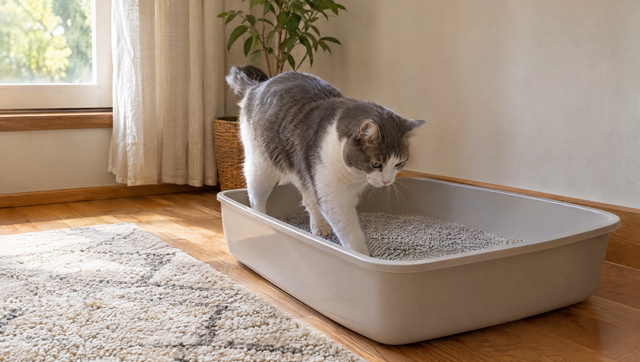
- Give her a calm setup. ISFM advises keeping food and water away from the litter box and from each other, with somewhere for her to hide.
- Ask your vet whether a note of what and when she eats would help them.
The ISFM guidelines say force-feeding is never indicated. Cornell gives the reason: force-feeding can make a cat's aversion to food even worse.
If you're not sure how much she normally needs, our guide on how much to feed your cat gives you a baseline to compare against.
Call your vet promptly if your cat:
- has eaten nothing for 24 hours, or 12 hours for a kitten under six weeks (Cornell)
- has had a poor appetite for a few days, the period Merck links to fatty liver
- is obese and has gone off her food, since Merck notes obese cats are most at risk
- is drooling, licking her lips, or retching at the sight or smell of food (ISFM)
- is hiding or avoiding the food bowl (Cornell)
- has a yellowish tinge to her gums or the skin of her ears (Cornell)
What will the vet do?
Cornell advises treating the poor appetite directly while searching for its cause, so your vet may work on both at once.
Cornell notes that one option, mirtazapine, can stimulate a cat's appetite and relieve nausea. Your vet can advise on options based on what they find.
The ISFM guidelines note that esophagostomy feeding tubes are well tolerated by cats and can be used by caregivers at home.
Merck notes that appetite stimulants are mostly not effective once fatty liver has developed, and a feeding tube is necessary. Cornell says tube feeding usually continues for a month or so after the cat goes home.
Merck describes the outlook as good when the diagnosis is made early and treatment starts promptly. Cornell adds that early cases can recover in a few days, and cats who survive rarely relapse.
Can I lower the chance of it happening again?
Some causes are illnesses only your vet can look into. For the triggers the sources name, these are good questions to bring to your vet.
- Food changes. Merck lists a change of diet as a trigger, so ask your vet how and when to switch foods.
- Upheaval. Merck lists moving, boarding and a new pet as triggers, so ask your vet how to plan around them.
- Teeth. Cornell lists dental problems among the causes, so ask your vet about home dental care. Our guide to brushing a cat's teeth walks through it.
If she brings up hair as well as skipping meals, read are hairballs normal for cats. Cornell's hairball guidance lists refusing food among the signs that need a vet without delay.
Questions cat parents ask
How long can a cat go without eating?
Cornell warns that a loss of appetite lasting 24 hours can seriously affect an adult cat, and 12 hours can be a lethal threat for a kitten under six weeks. Going by that, call your vet if she has eaten nothing for a day.
My cat is not eating but drinking water. Is that OK?
Merck links fatty liver to a period of poor appetite, and Cornell's 24-hour warning is about food. Drinking water doesn't change that guidance, so call your vet if she still isn't eating.
Why is my cat not eating after moving house?
Merck names moving as one of the triggers. The ISFM guidelines recommend somewhere quiet to hide, and Cornell's 24-hour warning still applies, so call your vet if she hasn't eaten within a day.
Should I try a different food?
The ISFM guidelines advise against introducing a new diet to a cat who is hospitalized, and note that many cats are wary of new foods. Ask your vet before switching while she's unwell.
Sources
- Cornell Feline Health Center: Anorexia
- Cornell Feline Health Center: Hepatic Lipidosis
- Cornell Feline Health Center: Feline Upper Respiratory Infections
- Cornell Feline Health Center: The Danger of Hairballs
- Merck Veterinary Manual: Disorders of the Liver and Gallbladder in Cats
- Merck Veterinary Manual: Feline Hepatic Lipidosis
- Taylor S, et al. 2022 ISFM Consensus Guidelines on Management of the Inappetent Hospitalised Cat. Journal of Feline Medicine and Surgery, 2022
This article is for general information and is not veterinary advice. Talk to your vet about your own cat — they know the animal in front of them.
Choolip products are food supplements, not medicine. They are not intended to diagnose or manage any medical condition. If your cat has been diagnosed with a condition, their diet should be set by your vet.
Try a Little of Everything First
The Trial Box has a Variety Pouch, two Total Balance Jumbo sticks and two Berry Good Milks. One box, $22.