Cats
 Dogs
How Much Do Cats Sleep?
How many hours a day cats really sleep, why hunters nap so much, why cats wake at dawn, how sleep changes with age, and when a change is worth a vet visit.


How much do cats sleep? A 2024 review in Frontiers in Neurology puts a typical cat's sleep at 12 to 20 hours a day. Kittens and older cats may sleep more.
The Merck Veterinary Manual adds that cats sleep about 40% of the day and rest for another 22%. That's roughly 15 hours spent asleep or resting.
So a cat that naps most of the day is generally within that range. Cornell's Feline Health Center advises watching for changes in your own cat's sleeping pattern instead. Here's what the research shows about a typical day, and why.
How much do cats sleep in a day?
The Frontiers in Neurology review gives 12 to 20 hours as the typical range. The studies below suggest age and home life can shift where a cat falls in it.
Merck's manual breaks the day down further, using a study of free-ranging farm cats. Merck gives percentages; the hours column is our own arithmetic on a 24-hour day:
| Activity | Share of the day | About how long (our estimate) |
|---|---|---|
| Sleeping | 40% | 9.6 hours |
| Resting, awake | 22% | 5.3 hours |
| Grooming | 15% | 3.6 hours |
| Everything else | 23% | 5.5 hours |
Merck counts resting while awake separately from sleep, so some of the time a cat looks asleep may be quiet rest.
A 2024 study that fitted 28 pet cats with collar sensors found they spent 86% of their time lying, sitting or standing.
In that study, cats that were the only cat in the house spent more time lying down than cats living with other cats.
Why do cats sleep so much?
A review of sleep across mammals in the journal Nature found that meat eaters sleep significantly more than plant eaters. Cats are meat eaters, so this may be part of the answer.
The same review found that sleep amounts track diet, body size and how safe an animal's sleeping place is.
Here's a fact to put your cat's naps in context. Some mammals, such as bats and opossums, sleep 18 to 20 hours a day. Elephants and giraffes manage as little as 3 to 4.
The AAFP and ISFM's feline environmental needs guidelines note that cats that hunt for themselves may catch 10 to 20 small prey a day.
Why is my cat awake at dawn?
Cats are crepuscular, meaning most active around dawn and dusk. Merck's manual describes them this way, and the 2024 Frontiers review notes their peak wakefulness falls at sunrise or sunset, timed with the activity of their prey.
A 2022 study in the journal Animals tracked cats living indoors and in a large outdoor enclosure. Both groups had activity peaks around twilight. The indoor cats were also active before sunrise, around 5 a.m., and again in the late evening.
The same researchers found that both groups were least active in the middle of the night and the middle of the day.
Those twilight peaks are also when sudden sprints around the house tend to happen. Our guide to cat zoomies explains what drives them.
Can I shift my cat's schedule?
The Animals study found cats were more active when people were around, which suggests your routine may shape theirs. The sources point to a few things to discuss with your vet:
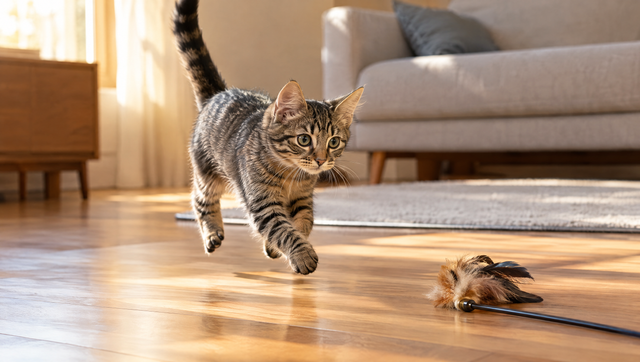
- Play. Merck and the AAFP both recommend play that copies hunting, such as a wand toy your cat can chase, pounce on and catch. Ask your vet whether evening play suits your cat.
- Meals. Merck's manual notes cats prefer around 13 small meals a day. Ask your vet how to split your cat's daily portion.
- Light. The Frontiers review notes that light at night can affect a cat's sleep, as it does in people.
Do kittens and older cats sleep more?
The Nature review found that all land mammals sleep the most at birth, with sleep gradually falling to adult levels as they grow. Merck's manual describes healthy, well-fed newborn kittens as quiet animals that sleep whenever they aren't nursing.
Younger cats are also busier when awake. In the 2024 sensor study, time spent active fell as cats got older.
Cornell's Feline Health Center notes that older cats tend to be less active and playful, and may sleep more.
Curious where your cat sits on that curve? Our guide to cat years to human years shows how a cat's age lines up with ours.
Where do cats like to sleep?
Cornell advises keeping an older cat's favorite bed out of drafts, and to "think warm, not hot," since a cat that can't move quickly could get burned by too much heat.
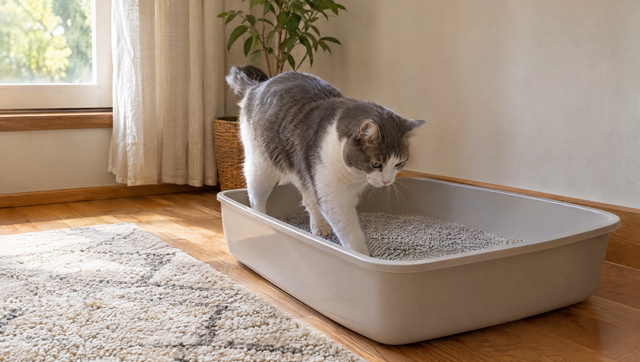
The AAFP and ISFM guidelines recommend at least two resting areas per cat, set apart from food, water and the litter box. They also recommend giving cats access to elevated spots, such as shelves or perches.
The same guidelines list resting or sleeping in contact or close by as a sign two cats belong to the same social group.
Our guide on how to keep an indoor cat warm in winter covers beds, heated pads and safe spots.
When is a change in sleep a reason to call the vet?
Cornell's Feline Health Center says any change in behavior or health, sudden or gradual, warrants a visit to your vet without delay.
It warns owners not to chalk up changes in an older cat's health or behavior to old age, because changes, often gradual, can be signs of illness or dental problems that a vet should check.
Call your vet promptly if your cat:
Cornell lists these among the changes in an older cat to report to your vet:
- changes its sleeping or eating patterns
- avoids its favorite resting place and finds places to hide instead
- meows more often
- doesn't come when called
- misses or doesn't use the litter box
- stops grooming, gains or loses weight, or has trouble reaching favorite places
For healthy senior cats, Cornell's page quotes a feline vet who calls a yearly senior exam, with a smaller exam in between, ideal. Ask your vet about any change in sleep at those visits.
Questions new cat parents ask
Is it normal for my cat to sleep all day?
A 2024 review puts typical cat sleep at 12 to 20 hours a day, so long daytime naps are generally within that range. Cornell advises calling your vet about any change in your cat's sleeping pattern.
How much do kittens sleep?
Merck describes healthy newborn kittens as sleeping whenever they aren't nursing, and a review in Nature found sleep in mammals is highest at birth and falls to adult levels with growth.
Do indoor cats sleep more than outdoor cats?
The evidence is limited. In the 2022 Animals study, cats in a large outdoor enclosure covered more ground and were more active at night than indoor cats.
Do cats sleep more in winter?
The evidence is limited. In the 2024 sensor study, cats with outdoor access were less active in winter than in summer, while indoor-only cats stayed the same year-round.
Sources
- Merck Veterinary Manual: Social Behavior of Cats
- Niesman IR, et al. Stress and the domestic cat: have humans accidentally created an animal mimic of neurodegeneration? Frontiers in Neurology, 2024
- Siegel JM. Clues to the functions of mammalian sleep. Nature, 2005
- Parker M, et al. Comparison of Locomotor and Feeding Rhythms between Indoor and Outdoor Cats Living in Captivity. Animals, 2022
- Smit M, Corner-Thomas RA, Draganova I, Andrews CJ, Thomas DG. How Lazy Are Pet Cats Really? Using Machine Learning and Accelerometry to Get a Glimpse into the Behaviour of Privately Owned Cats in Different Households. Sensors, 2024
- Merck Veterinary Manual: Management of the Neonate in Dogs and Cats
- Cornell Feline Health Center: Loving Care for Older Cats
- Ellis SLH, Rodan I, Carney HC, et al. AAFP and ISFM Feline Environmental Needs Guidelines. Journal of Feline Medicine and Surgery, 2013
This article is for general information and is not veterinary advice. Talk to your vet about your own cat — they know the animal in front of them.
Try a Little of Everything First
The Trial Box has a Variety Pouch, two Total Balance Jumbo sticks and two Berry Good Milks. One box, $22.