Cats
 Dogs
Stocking Stuffers for Dogs
The ASPCA suggests puzzle toys and chew toys for a dog's stocking. How to pick the right size, keep edible gifts within the WSAVA's 10% limit, and avoid holiday hazards.


Good dog stocking stuffers start with the ASPCA's own suggestion: puzzle toys that can be filled with healthy foods, or chew toys.
Pick a size that suits your dog's mouth and chewing style, and keep edible gifts inside the WSAVA's limit of 10% of daily calories.
The rest of this guide is a checklist: what to look for in a toy, how much food a stocking can safely hold, and which festive extras belong out of reach.
What makes good dog stocking stuffers?
The ASPCA's position on chews and toys comes down to fit. It asks owners to choose products designed for the species, size and chewing habits of their own dog.
That gives three quick questions to ask of anything you buy:
- Is it made for dogs? Toys and snacks for people, or for other pets, are not designed around a dog's jaws.
- Is it the right size? The ASPCA says larger, durable products suit large breeds and dogs who chew hard and fast.
- Will your dog use it the way it was meant to be used? A food puzzle should be worked at, and a chew should be chewed slowly, not swallowed in chunks.
The WSAVA, the world body for small animal vets, adds one habit that covers every gift on this list: supervise your dog with chews, treats and toys.
Which toys are safe to put in a stocking?
Food puzzles are the ASPCA's first suggestion for a reason. Its enrichment guide says food puzzles are a great way to slow down your dog's eating and provide mental stimulation.
The same guide notes that dogs who don't get enough stimulation tend to find their own, often as unwanted behaviors.
A snuffle mat is one example the ASPCA describes: you hide kibble throughout the mat and your dog sniffs it out.
What size should a chew toy be?
The ASPCA is firm here. It says excessively small products, or products that break into pieces, should not be offered as toys to any dog, because they can be swallowed whole and cause choking or a blockage.
Rubber and hard plastic toys are not designed to be eaten and should not break apart, the ASPCA adds. Throw durable chews away before they become excessively worn, since thin worn ends can snap off and be swallowed.
Which chews should I skip?
The WSAVA's guide advises avoiding excessively hard chews, such as antlers and hooves, and anything with sharp edges. It also lists bones, cooked and raw, as very dangerous to dogs.
For edible chews, the ASPCA says they should be eaten slowly and deliberately, and matched to moderate or light chewers. Our guide to safe chews for dogs goes through the common types.
How much food can go in a dog's stocking?
Less than you might expect. The WSAVA's guide says treats should make up less than 10% of a dog's daily calories, and should never replace a meal.
Its table shows how small that allowance is for an average healthy adult dog at an ideal weight:
| Dog's weight | Daily calories from extras (WSAVA) |
|---|---|
| 4 kg (about 9 lb) | 24 |
| 10 kg (about 22 lb) | 47 |
| 20 kg (about 44 lb) | 79 |
| 30 kg (about 66 lb) | 108 |
| 40 kg (about 88 lb) | 134 |
Here's a surprising number. The same WSAVA guide lists one 190 g rawhide bone at about 700 calories, more than five times the daily allowance of a 40 kg dog.
A few habits keep a stocking inside the limit:
- Check the calories on the pack. The WSAVA suggests contacting the manufacturer if they aren't on the label.
- Spread edible gifts over several days rather than one morning. The FDA warns that a dog who gobbles a stocking's worth of snacks at once may find them hard to digest.
- Use part of your dog's usual dinner. The ASPCA suggests stuffing a puzzle toy with your pet's regular meal.
Your vet can tell you what your own dog's daily calorie needs are.
What about something to lick?
Lickable foods can be spread on a lick mat or packed into a food puzzle. Look for a product labeled for dogs, with feeding directions by body weight and clear storage instructions.
One option that meets those points is the Squeeze Vita Stick Variety Pouch. It holds seven recipes made with real chicken, salmon, tuna, pollack and lobster plus fruits and vegetables, in 15 g sticks.
Its product page says it is for dogs and cats from 12 months, gives daily amounts by weight, and advises refrigerating after opening. Each recipe has its own page with the full analysis, so you can count it inside the 10%.
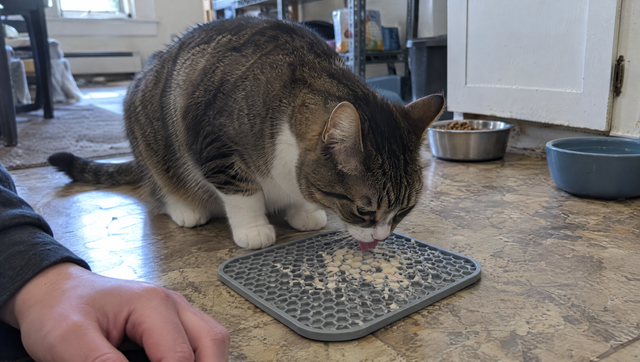
It is optional. Your dog's usual wet food, spread on a lick mat, is another way to use one.
Which holiday items should stay out of the stocking?
Watch the wrapping as well as the gift. The ASPCA's holiday tips point out that pets can smell what is inside a wrapped present, so keep wrapped food or candy off the floor.
- Chocolate. The FDA says unsweetened and baking chocolate are especially dangerous because they hold the highest concentration of the ingredient that is toxic to pets. See how much chocolate is dangerous for a dog if some goes missing.
- Sugar-free sweets and some nut butters. The FDA warns that xylitol, also sold as birch sugar or wood sugar, is dangerous for dogs, and that it turns up in some peanut and nut butters and sugar-free gum. Check the ingredients before filling a puzzle toy.
- Table scraps. The ASPCA's advice is to say no to leftovers from the holiday dinner, even a few scraps.
- Bones from the roast. The FDA notes that sharp bone pieces can injure a dog's mouth, esophagus and stomach.
Then there is the ribbon. The FDA asks owners to keep a close eye on tinsel, string and ribbons, which it says can cause serious stomach and intestinal damage if swallowed, and to collect all ribbon and string once gifts are opened.
Call your vet promptly if your dog:
- swallows a chunk of a chew or toy. The ASPCA advises consulting a vet immediately
- eats ribbon, string or tinsel
- eats chocolate, or anything that may contain xylitol. The FDA says signs from xylitol can begin within 10 to 60 minutes
- gets into the trash or the roast. You can also call the ASPCA Animal Poison Control Center at (888) 426-4435
Questions new puppy parents ask
What can I put in a puppy's stocking?
The same rules apply, scaled down. The ASPCA asks you to match a toy to your dog's size and chewing habits, and a growing puppy's main food matters most, so ask your vet about extras.
Is rawhide a good stocking stuffer?
The ASPCA says owners should limit how much rawhide a dog eats at a time and stop them swallowing large pieces. The WSAVA lists a 190 g rawhide bone at about 700 calories, so size matters for the calorie count too.
Can I put peanut butter in a dog's stocking?
Only if it is free of xylitol. The FDA lists some peanut and nut butters among products that can contain it, and advises checking the ingredients on the label.
How many snacks can a dog have on Christmas Day?
The WSAVA's limit doesn't change for holidays: under 10% of the day's calories, all extras combined. For a 10 kg dog, that is about 47 calories.
Sources
- ASPCA: It's That Time of Year Again! Keep Your Pets Safe This Holiday Season With These Tips, 2015
- ASPCA: Holiday Safety Tips
- ASPCA: Position Statement on Dog Chews/Treats
- ASPCA: Canine DIY Enrichment
- WSAVA: Feeding Treats to Your Dog, 2024
- FDA: Keep Your Dogs and Cats Safe From Holiday Hazards
- FDA: Paws Off Xylitol; It's Dangerous for Dogs
This article is for general information and is not veterinary advice. Talk to your vet about your own dog — they know the animal in front of them.
Try a Little of Everything First
The Trial Box has a Variety Pouch, two Total Balance Jumbo sticks and two Berry Good Milks. One box, $22.