Cats
Cats Dogs
DogsCan Dogs Eat Garlic or Onions?
Garlic and onions can damage a dog's red blood cells, and the signs often appear days after the meal. How much is risky, why powders matter, and what to do if your dog ate some.


Can dogs eat garlic? The ASPCA lists garlic, onion and chives among the foods to avoid feeding pets, because they can cause stomach irritation and red blood cell damage that can lead to anemia. The WSAVA lists garlic as a toxic food ingredient for dogs.
The Merck Veterinary Manual rates garlic three to five times more toxic than onion, and lists raw, cooked, dehydrated and granulated forms as toxic.
If your dog has eaten garlic, call your vet or the ASPCA Animal Poison Control Center at (888) 426-4435 now, even if your dog seems fine. Merck notes that the red blood cell breakdown typically develops 3 to 5 days after the meal.
How worried to be depends on the amount, the form and your dog's size. The sections below explain why each one matters.
Why is garlic bad for dogs?
Merck explains that garlic and onions contain sulfur compounds that act as oxidants once they're absorbed, and that these cause oxidative damage to red blood cells.
The damaged cells form small clumps of altered hemoglobin called Heinz bodies, and the cells then break down (hemolysis). The result is called Heinz body hemolytic anemia.
The ASPCA puts it in plain terms: onion, garlic and chives can cause stomach irritation and red blood cell damage, which can lead to anemia, a low red blood cell count.
Here's a surprising part: Merck lists cooked garlic as toxic, alongside raw, dehydrated and granulated forms. It notes that concentrated forms such as powders, flakes and dry soup mixes carry particular risk.
How much garlic is toxic to a dog?
We found no veterinary source that sets a safe amount of garlic for dogs. Merck gives a figure for onion: in dogs, eating 15 to 30 grams of raw onion per kilogram of body weight has resulted in signs. It rates garlic three to five times more toxic.
Repeated small amounts add up as well. In a 2000 study in the American Journal of Veterinary Research, healthy dogs were given garlic extract equal to 5 grams of whole garlic per kilogram, once a day for a week.
Their red blood cell counts fell to their lowest point on days 9 to 11. Heinz bodies and damaged red cells appeared, although none of the dogs became anemic.
The researchers' conclusion was direct: foods containing garlic should not be fed to dogs.
Real cases look like this. A 2005 report in the Journal of the American Animal Hospital Association describes a miniature schnauzer that ate Chinese dumplings made with chives and garlic.
He had eaten them two days before he was brought in, off his food, and blood tests showed severe Heinz body hemolytic anemia. The report attributes it to the chive and garlic in that meal.
Why do the signs show up days later?
Merck describes the timeline in stages, which explains why a dog can seem well for the first day or two.
- Within 24 hours, Heinz bodies start forming in the red blood cells.
- Around 72 hours, that damage peaks.
- Around 3 to 5 days after the meal, the damaged cells typically break down (hemolysis).
Merck lists the signs that may occur as tiredness (lethargy), poor appetite (anorexia), fast breathing, a fast heart rate, weakness, tiring easily on walks, yellowing of the gums or eyes (icterus), red or brown urine (hemoglobinuria), collapse and death.
The ASPCA also lists gastrointestinal irritation among the effects of onion, garlic and chives.
Merck ranks cats as more susceptible than dogs, so if you share your home with both, the same warning applies to your cat.
Are garlic supplements or garlic for fleas safe for dogs?
Garlic turns up in some products sold for dogs, often with claims about fleas. A veterinary evidence review found no studies that support those claims.
A 2020 evidence review in Veterinary Evidence, from the University of Bristol, searched for studies of garlic to prevent, repel or kill fleas on dogs. It found none that met its criteria, and concluded there is a lack of peer-reviewed evidence.
On safety, the picture is mixed. A 2018 study in BMC Veterinary Research gave nine beagles a processed product called aged garlic extract for 12 weeks and found no blood changes at the doses tested.
That study was small, funded by the extract's manufacturer, and tested one processed product. Its results apply to that product at those doses, and not to ordinary garlic, garlic powder or other garlic products.
The WSAVA's guide to treats lists garlic, onions, leeks, shallots and chives among toxic food ingredients for dogs. If a product you're considering lists garlic, ask your vet before giving it.
My dog ate garlic. What should I do?
Call your vet or the ASPCA Animal Poison Control Center at (888) 426-4435. Have three things ready: your dog's weight, what was eaten, and roughly how much.
Keep the packaging or recipe if you can, since Merck notes that concentrated forms such as powders carry particular risk.
Merck describes early decontamination, such as making a dog vomit soon after the meal. Later care can include oxygen or a blood transfusion as needed, and intravenous fluids to protect the kidneys.
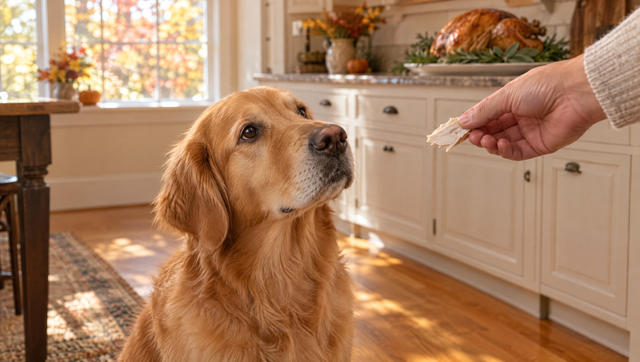
Holiday meals deserve extra care. The ASPCA notes that onions and garlic are in a lot of Thanksgiving dishes, so see our guide to can dogs eat turkey for the rest of the plate.
Call your vet promptly if your dog:
- ate garlic, onion, leeks or chives in any form, including powder, even if they seem fine, since Merck's timeline puts the red blood cell breakdown 3 to 5 days later
- ate stuffing, gravy, soup or sauce made with garlic or onion
- seems unusually tired or weak in the days after
- has yellowish gums or eyes
- has red or brown urine
- is breathing fast, or tires quickly on a walk
- collapses
The last five are among the signs Merck lists for garlic and onion poisoning.
Questions new puppy parents ask
Can a small amount of garlic kill a dog?
Merck lists collapse and death among the possible outcomes. It measures risk in grams per kilogram of body weight, so the amount and the dog's size matter, and it flags concentrated powders. Lee and colleagues saw blood changes from repeated daily doses. Call your vet whenever garlic is eaten.
Are onions worse than garlic for dogs?
Merck rates garlic three to five times more toxic than onion. The WSAVA lists both as toxic food ingredients for dogs.
Is garlic powder safe for dogs?
Merck lists dehydrated and granulated garlic as toxic, and notes that concentrated forms like powders carry particular risk.
Which other foods are toxic to dogs?
The WSAVA list includes chocolate, grapes and raisins, xylitol, macadamia nuts and raw yeast dough. See how much chocolate is dangerous for a dog, and our list of what fruits can dogs eat.
Sources
- Merck Veterinary Manual: Garlic and Onion (Allium spp) Toxicosis in Animals
- ASPCA Animal Poison Control: People Foods to Avoid Feeding Your Pets
- ASPCA: Thanksgiving Safety Tips
- WSAVA: Feeding Treats to Your Dog, 2024
- Lee KW et al. Hematologic changes associated with the appearance of eccentrocytes after intragastric administration of garlic extract to dogs. American Journal of Veterinary Research, 2000
- Yamato O et al. Heinz body hemolytic anemia with eccentrocytosis from ingestion of Chinese chive and garlic in a dog. Journal of the American Animal Hospital Association, 2005
- Yamato O et al. Safety and efficacy of aged garlic extract in dogs. BMC Veterinary Research, 2018
- Buckley LA. Can garlic prevent, repel or kill fleas that infest dogs? Veterinary Evidence, 2020
This article is for general information and is not veterinary advice. Talk to your vet about your own dog — they know the animal in front of them.
Choolip products are food supplements, not medicine. They are not intended to diagnose or manage any medical condition. If your dog has been diagnosed with a condition, their diet should be set by your vet.
Try a Little of Everything First
The Trial Box has a Variety Pouch, a Jumbo stick and two Berry Good Milks. Subscribe & Save, $22.00 a box.