Cats
 Dogs
How to Choose a Lickable Supplement for Your Dog
AAFCO says healthy dogs on a complete diet generally don't need a supplement. If you and your vet choose a lickable one, here is the label checklist and the red flags.


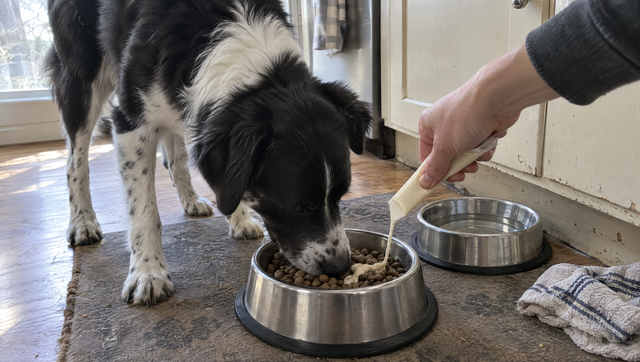
A lickable dog supplement is a soft, creamy food product squeezed from a stick or pouch, given on its own, on a spoon or over a meal.
Before buying one, know that AAFCO says healthy dogs eating a complete and balanced diet for their life stage generally do not need supplements. If you and your vet decide to use one, the label tells you most of what you need to know.
This guide walks through the checklist: the species and life stage, the ingredients, the nutrient analysis, the feeding directions and who made it, plus the red flags to walk away from.
Does my dog need a supplement at all?
For most dogs on a complete food, the answer from the veterinary bodies is no. The ASPCA says that when you feed a complete and balanced diet, a vitamin supplement is unnecessary unless your vet has diagnosed a specific deficiency.
AAFCO, which writes the model pet food rules that US states can adopt, says the first question to ask is whether a pet really needs a supplement at all.
It warns that adding one to a complete and balanced diet risks going over the upper limits for some nutrients.
It also says a vet may safely recommend specific supplements to go along with the food, and that owners should always talk to their vet before adding one. Our hub on pet supplements covers that conversation.
Ask your vet first if your dog:
- has a medical condition, dietary sensitivities, or eats a veterinary-prescribed diet. The WSAVA says conventional extras may not be appropriate for these dogs
- is a puppy. AAFCO notes that different life stages need different amounts and ratios of nutrients
- already takes another supplement, since AAFCO warns about exceeding upper limits
Does a lickable supplement count toward snack calories?
Yes. The WSAVA, the world body for small animal vets, counts supplements as treats, alongside snacks, chews and foods used to give medication. It says all of them together should make up less than 10% of a dog's daily calories.
The ASPCA is stricter, at five percent or less of daily food intake. The two bodies differ, so ask your vet which figure suits your dog.
Here is a number that surprises many owners. The WSAVA lists one tablespoon of peanut butter at 81 calories and one ounce of cheddar at 120, and notes that for some dogs, one portion like this could go over the whole day's allowance for extras.
So check the calories per stick. If they aren't on the pack, the WSAVA's advice is to contact the manufacturer.
Why choose a lickable format?
We found no published study comparing lickable supplements with chews, tablets or powders in dogs. The choice comes down to your dog and your routine.
A soft puree can be given from the stick, on a spoon, mixed into food, or spread on a lick mat.
Our guide to what a lick mat is for explains how they are used, and our comparison of supplement sticks, chews or powders weighs up each format.
The WSAVA's general advice for anything given between meals still applies: supervise your dog, and keep the portion within the daily allowance.
What are the red flags?
Start with how these products are regulated. The FDA says it does not treat animal supplements as their own category. It regulates them either as food for animals or as animal drugs.
Food for animals generally doesn't need FDA review before it goes on sale, so the label and the company behind it carry most of the weight.
- Claims to cure, treat, prevent or mitigate a disease. The FDA says claims like these can show a product is being offered as a new animal drug, which needs FDA approval.
- A product made for people. AAFCO says animal feed supplements are not like human dietary supplements, and that human supplements should not be used for drug purposes in pets.
- No species named. AAFCO expects the species to be shown clearly on the front panel.
- No manufacturer's name or address, so there's nobody to ask about calories or a problem with a batch.
- No feeding directions, or directions that don't match your dog's weight.
What should a lickable dog supplement label show?
AAFCO lists the items pet food and treat labels generally carry. Here is what each one tells you about a lickable dog supplement:
| Label item | What to check |
|---|---|
| Product name and purpose | Whether it is sold as food, a supplement or a treat |
| Species | That it names dogs, on the front panel |
| Net quantity | How much is in each stick or pouch, in both US and metric units |
| Nutrient analysis panel | Minimum crude protein and fat, maximum crude fiber and moisture |
| Ingredient list | Ingredients in order of weight, heaviest first |
| Feeding directions | How much, for what body weight, how often |
| Manufacturer's name and address | Who stands behind it, or who it was "manufactured for" or "distributed by" |
One detail worth knowing: AAFCO notes that "crude" in the analysis panel refers to the testing method, not the quality of the nutrient.
A supplement may also say "for intermittent or supplemental feeding only". AAFCO uses that wording for products that are not complete and balanced, so your dog's main food stays in place.
What does the NASC seal mean?
Some supplements carry a seal from the National Animal Supplement Council. NASC is an industry body: it describes itself as a collective of over 300 companies working on self-regulation. It is not a government agency.
NASC says companies using its Quality Seal must pass an independent quality audit, keep an adverse event and complaint reporting system, follow its labeling guidelines, and submit to random testing by an independent lab to check products meet their label claims.
Which lickable dog supplement fits my dog?
Take the checklist to the shelf. Choose one that names dogs and your dog's age, lists its ingredients by weight, gives feeding directions by body weight, and tells you how to store it once opened.
One option that meets these points is the Squeeze Vita Stick Variety Pouch. It holds seven lickable recipes made with real chicken, salmon, tuna, pollack and lobster plus fruits and vegetables, one 15 g stick of each.
Its product page lists it for cats and dogs from 12 months, gives daily amounts by body weight, and says to refrigerate after opening. The creamy texture can go on a lick mat or over a meal.
It is optional. A dog on a complete food already gets the nutrients that food provides, and any stick counts toward the daily allowance for extras.
Questions new dog parents ask
Are lickable supplements okay for puppies?
Check the life stage on the label. AAFCO notes that growth needs different amounts and ratios of nutrients than adult maintenance. Ask your vet before giving a puppy any supplement.
Can I give my dog a lickable supplement every day?
Follow the feeding directions on the label, and keep all extras under the daily allowance: less than 10% of calories per the WSAVA, or 5% per the ASPCA. Your vet can tell you what fits your dog.
Is a lickable supplement a meal?
No. The WSAVA says extras should never replace a meal, because every dog needs a complete and balanced diet.
Can my dog share a lickable made for cats?
Only if the label names dogs too. AAFCO expects the species on the front panel, and the feeding directions should cover your dog's weight.
Sources
- AAFCO: Supplements
- AAFCO: Pet Food and Treat Label Requirements
- AAFCO: Selecting the Right Pet Food
- ASPCA: Dog Nutrition Tips
- WSAVA: Feeding Treats to Your Dog
- FDA: FDA's Regulation of Pet Food
- FDA: Animal Food Labeling and Pet Food Claims
- National Animal Supplement Council: NASC Quality Seal (industry body)
- National Animal Supplement Council: About Our Mission (industry body)
This article is for general information and is not veterinary advice. Talk to your vet about your own dog — they know the animal in front of them.
Try a Little of Everything First
The Trial Box has a Variety Pouch, a Jumbo stick and two Berry Good Milks. Subscribe & Save, $22.00 a box.